

Embedded software monetization: 5 proven strategies for vertical SaaS platforms
May 6, 2026

Blog
Most vertical SaaS platforms are under-monetizing their software. Not because they lack opportunity, but because they stop at payments.
Embedded payments are a proven revenue lever, but they are only one part of a broader embedded software monetization strategy. Today’s leading SaaS platforms are building multiple revenue streams directly into their products, from APIs and data to marketplaces and premium functionality. Platforms that rely on a single monetization layer leave significant revenue on the table and limit their long-term growth.
The fastest-growing software companies treat monetization as a core product decision. They design business models that align with how their end users interact with the platform, improving both customer experience and recurring revenue over time.
This article breaks down five proven strategies to monetize your embedded software and premium feature tiers, and explains how to choose the right approach based on your unique needs.
What is embedded software monetization for vertical SaaS?
Embedded software monetization is the practice of generating revenue from the functionality built directly into your platform, rather than relying only on subscription fees. For vertical SaaS companies, this means turning everyday product usage into scalable revenue streams.
The most common embedded monetization models include:
- Payment processing: Earning a margin on transactions
- API usage fees: Charging for integrations or usage-based access
- Data licensing: Monetizing aggregated, anonymized industry data that only your platform can produce
- Marketplace commissions: Taking a percentage from third-party services
- Premium feature tiers: Gating advanced functionality for power-users
Each model varies in revenue potential and complexity. The goal isn’t to activate everything at once, but to build the right mix for your platform, end users, and stage of growth.
How these monetization layers compound over time
The real upside of embedded software monetization is how these layers reinforce each other as your platform scales.
Payments often serve as the foundation, providing visibility into transaction data, merchant behavior, and cash flow patterns. And that foundation is growing fast. According to Bain & Company, embedded finance made up about $2.6 trillion, or nearly 5% of US financial transaction volume in 2021, and is expected to grow to over $7 trillion, more than 10% of total transaction value, by the end of 2026. As more of that transaction volume moves through software platforms, the opportunity to capture revenue from it increases.
For example, once you’re processing payments, you can:
- Package transaction data into benchmarking tools or industry reports
- Identify high-value merchants and upsell premium features
- Surface relevant third-party services through a marketplace at the right moment in the workflow
As adoption grows, these layers reinforce each other. Payments drive data. Data improves product decisions. Better product experiences increase adoption, which drives more volume back through payments.
Over time, this creates a more durable business model.
This is why platforms that invest early in embedded monetization tend to outperform over time. They are building a system where revenue, product usage, and merchant retention all move together.
There is also a defensibility component. The more revenue streams you embed into your core workflows, the harder it becomes for merchants to leave. Switching costs are economic. When payments, reporting, integrations, and services live on your platform, you become the system your merchants rely on to run their businesses.
Why integrated payments are only the beginning
Payments are the most visible embedded software monetization opportunity, and for good reason. When a merchant processes $10,000 through your platform, and you earn 30–50 basis points, that revenue scales directly with volume. But for most SaaS platforms, that’s only one piece of the model.
The broader opportunity comes from the other capabilities your platform already delivers:
- API connections to third-party tools
- Proprietary data on customer behavior and industry benchmarks
- A marketplace of integrations or service providers
- Premium features that power-users need
Most vertical SaaS platforms haven’t fully activated these monetization layers yet.
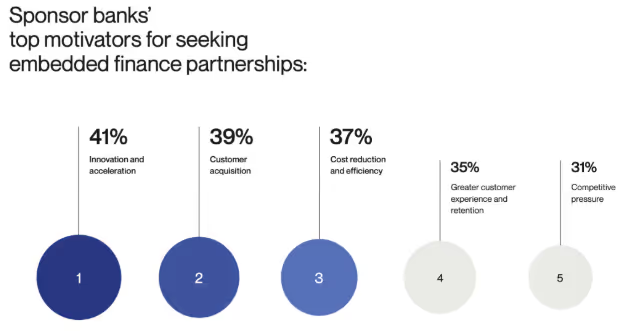
The cost of stopping at payments is real. A platform processing $50 million annually might generate $200,000 in payment processing revenue, but without monetizing APIs, data, or marketplace activity, it leaves new revenue streams untapped. And the upside isn’t just revenue. Embedded finance also improves how platforms acquire and retain customers. In Alloy’s 2024 State of Embedded Finance report, 39% of sponsor banks cited customer acquisition and 35% pointed to customer experience and retention as top motivators for embedded finance partnerships.
As embedded software becomes more central to how businesses operate, the platforms that win will be the ones that monetize across their full ecosystem, not just payments.
5 proven strategies to monetize your embedded software
The most effective vertical SaaS platforms don’t rely on a single monetization stream. They layer multiple revenue streams into their product, each tied to how their merchants already use the platform.
Below is a practical breakdown of five proven strategies, including how each one generates revenue, where it fits in your platform’s lifecycle, and what it takes to implement. The goal is not to adopt everything at once, but to identify the highest-impact opportunities based on your product, your merchants, and your growth stage.
1. Payment processing revenue
Embedding payment processing lets you earn a margin on every transaction your users complete. With interchange-plus pricing, you can pass through costs and add a markup that scales with volume.
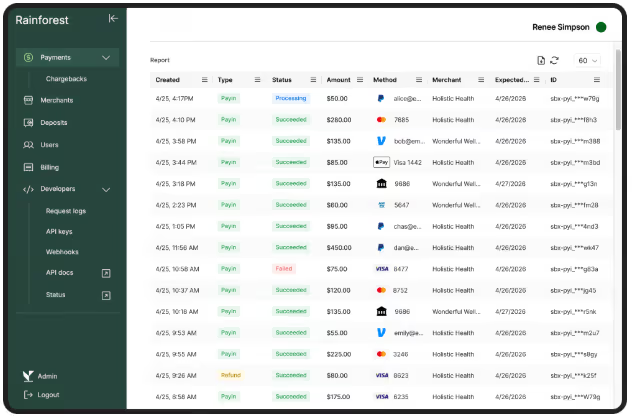
For platforms with meaningful transaction volume, this becomes a primary revenue driver. A SaaS platform processing $50M+ annually can generate $150K–$500K+, with larger platforms reaching seven figures.
Implementation sits in the middle. You’ll need onboarding, compliance, and integration, but purpose-built payment processors handle KYC, PCI, and fraud, which helps streamline the process.
This model works best when payments are already central to your user experience.
2. API usage fees
If your platform exposes APIs for integrations, automation, or data access, you can charge based on usage. This might be per-call pricing, usage tiers, or paid access beyond a free threshold. As customers integrate your platform more deeply, API usage becomes a predictable recurring revenue stream.
This works particularly well for platforms that already support:
- Frequent integrations with third-party tools
- Automation-heavy workflows
- Developer-driven use cases
3. Data licensing
Most software platforms generate valuable proprietary data. Aggregated insights on customer behavior, benchmarks, or transaction trends can be packaged into paid products.
This creates high-margin new revenue streams, especially in data-rich verticals, like healthcare or financial services.
The tradeoff is complexity. Data licensing requires governance, anonymization, and ongoing investment in data quality, but once established, it becomes a durable revenue layer.
4. Marketplace commissions
If your platform connects users with third-party service providers, you can earn a percentage of transactions or referrals.
This might include services like:
- Accounting or financial tools
- Lending or insurance providers
- Suppliers or operational services
Commissions typically range from 10–30%, depending on the use case.
Marketplace models take more effort to build and manage, but they strengthen your ecosystem and improve the overall customer experience while generating incremental revenue.
5. Premium feature tiers
Premium tiers let you capture more value from power-users without increasing prices for everyone else. This might include advanced reporting, integrations, automation, or priority support.
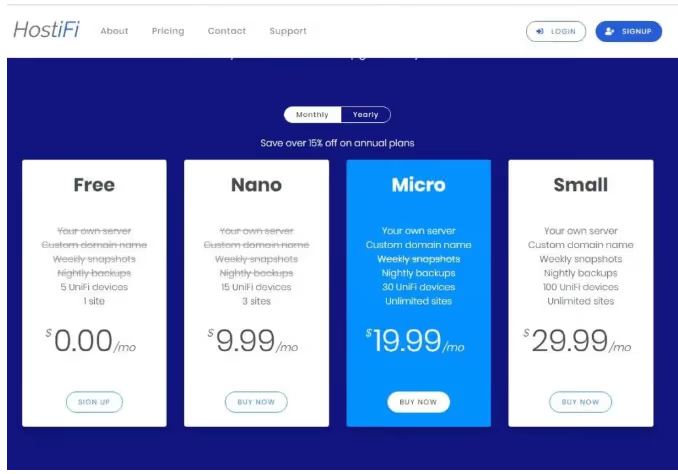
It’s one of the simplest ways to introduce new business and expand recurring revenue, since it relies more on packaging and pricing than new infrastructure.
This works best for platforms with clear differences between casual users and high-value customers.
Remember, the most effective monetization strategies evolve as your platform grows.
What matters is choosing the right starting point and sequencing additional revenue streams over time. The next section breaks down how to make that decision.
How to choose the right embedded software monetization strategy
The right monetization mix depends on four factors:
- Your merchant profile
- Your platform's data assets
- Your technical capacity
- Your commercial stage
Start by asking where your merchants already spend money outside your platform.
- If they're paying third-party processors, that's a payments opportunity
- If they're buying industry reports, that's a data licensing signal
- If they're using multiple disconnected tools, that's an API or marketplace play
Then assess implementation complexity against your current resources.
- Payments and premium feature tiers are the fastest to activate
- Data licensing and marketplace models require more infrastructure and legal groundwork, but can deliver strong margins at scale
Finally, consider your commercial terms with existing vendors. Platforms locked into rigid contracts with legacy payments providers often can't adjust pricing, access merchant data, or switch models without significant friction. That's a structural problem worth solving before layering on additional monetization strategies. Your payments foundation affects the economics of everything built on top of it.
FAQs about embedded software monetization
What is the difference between embedded payments and embedded software monetization?
Embedded payments are one monetization method. Embedded software monetization is broader. It includes payments, APIs, data, marketplaces, and premium features, all designed to generate revenue from how users interact with your platform.
When should a SaaS platform start monetizing embedded features?
As early as possible. The best time to introduce monetization is when users are already relying on core workflows, so revenue scales naturally with adoption rather than requiring major product changes later.
Do you need to build everything in-house to monetize embedded software?
No. Most platforms partner with providers for key components like payments or infrastructure. The goal is to maintain control over pricing, data, and user experience without taking on unnecessary complexity.
Start monetizing your embedded software with purpose-built solutions
Rainforest is purpose-built for vertical SaaS platforms looking to scale embedded software monetization, starting with payments. The platforms capturing the most value treat monetization as a core product decision, not an add-on.
With Rainforest, you get full control of your merchant relationships and data through fully white-labeled components. Transparent interchange plus pricing scales with your volume, and a single API covers payments, onboarding, KYC, and reporting, helping you streamline your payment experience. It also handles compliance, PCI, fraud, and risk monitoring, so you can focus on growing your platform.
Share this article
Subscribe to our blog
Be the first to hear about new content

Related articles
View all articles

.png)
.png)
Get started today.
Boost revenue with Rainforest
Get Started

Legal

© 2026 Rainforest Pay, Inc
