

What is vertical SaaS? Benefits, examples, and why it's winning
August 24, 2026

Blog
.png)
Nowadays there's a SaaS platform for literally almost everything. And the list of vertical SaaS companies is growing fast. Software built just for dental practices. Just for HVAC contractors. Law firms, or gyms, or whatever niche you can think of.
The reason is simple: nobody wants to bend a generic tool into shape when they could just use something that already gets how their business works. Vertical SaaS platforms dig deep into one industry's workflows and rules, and end up running the business instead of just sitting next to it.
Let’s dive into what vertical SaaS actually is, why it keeps winning, and where the next wave of growth is coming from in 2026. Payments show up a lot in this story. Because the platforms closest to how a business runs day-to-day are usually the ones closest to its money too.
What is vertical SaaS?
Vertical SaaS is cloud software built for one single niche industry. It's shaped around that industry's workflows, compliance rules, and even its terminology. Not just a few extra fields bolted onto a generic tool. Take business management software for beauty salons: it lets a salon book appointments, send reminders, and manage clients all in the same place. A generic tool can technically store all three. It just doesn't know they're supposed to work together. A platform built for one industry does.
That's also why vertical SaaS looks small from the outside and turns out to be a real business once a platform commits to owning it. Serve thousands of businesses in one industry and you've got a serious company… even if you'll never show up on a horizontal tool's total addressable market slide.
And plenty of these platforms have started layering in vertical AI which uses years of industry-specific data to automate work that generic AI just can't touch.
Vertical SaaS vs horizontal SaaS
Horizontal SaaS solves one function for everyone. Salesforce is a CRM that works for a law firm, a landscaping company, or a manufacturer. Slack does the same for team communication. Both are strong products, and both are deliberately industry-agnostic.
Vertical SaaS makes the opposite bet. It accepts a smaller market in exchange for a much stronger product fit, built around industry-specific workflows rather than a function that generalizes. A platform built for restaurants knows how tables, reservations, POS systems, and payroll fit together, while one built for healthcare understands HIPAA, appointments, and clinical workflows.
That difference decides where payments can sit. In many verticals, the workflow ends with money changing hands: a check at the table, a patient co-pay, a draw against a construction milestone. Horizontal software isn't in that moment, because the moment looks different in every industry. Vertical SaaS platforms already run it, which is why embedded payments can live inside the product instead of alongside it.
The main benefits of vertical SaaS
When it comes to the advantages that vertical SaaS platforms provide, there are three that stand out. Deeper product fit, stronger customer retention, and more room to grow revenue through embedded fintech.
Deep industry fit and product stickiness
A platform that speaks a specific vertical’s language – literally using its terminology and matching its workflows, becomes infrastructure a business runs on rather than a tool it occasionally opens. That fit is difficult for a generic competitor to replicate without becoming a vertical platform itself.
Higher retention and pricing power
Deep product fit shows up directly in retention and pricing. Customers don't casually replace software that already understands their billing processes, reporting requirements, and day-to-day operations. Those higher switching costs give vertical SaaS businesses room to command premium pricing while keeping customers for longer.
Investors have noticed, too. In fact, the 20 largest publicly traded vertical SaaS companies are now worth a combined value of around $300 billion. This suggests that the next wave of growth will come from vertical AI, as these platforms put years of industry-specific data and workflows to work.
Expansion through embedded fintech
Great software is only part of the story. That's why embedded fintech has become such a big part of the vertical SaaS playbook.
As JP Morgan’s 2025 research shows, platforms that put embedded finance in place are diversifying their revenue, while also lowering their churn rate.
That's why so many vertical platforms expand into payments first: they're already at the centre of their customers' daily operations, making financial services a natural next step.
Examples of vertical SaaS
Want to know if something's considered vertical SaaS? Ask one question: who was it built for? The best vertical SaaS platforms become the operating system for an entire business. Here are a few examples:
- Toast (restaurants): Combines POS, ordering, payroll, marketing, loyalty, and embedded payments into a single platform built specifically for restaurants.
- Procore (construction): Brings together project management, budgeting, subcontractor collaboration, invoicing, and progress billing around the way construction projects actually run.
- Clio (legal): Serves hundreds of thousands of legal professionals to help streamline the day-to-day business of a law firm such as case management, billing, trust accounting, client communication, all while layering AI for legal research, and document drafting.
- Mindbody (fitness and wellness): Helps gyms, studios, spas, and wellness businesses manage bookings, memberships, payments, marketing, and customer relationships from one place.
Each vertical SaaS platform owns the workflows that matter most to its industry. Rather than competing on a long list of features, these companies win by understanding a specific vertical better than others.
Why vertical SaaS is winning
Vertical SaaS didn't get here by accident. Three long-term trends are driving its growth.
First, a lot of industries are still catching up on digital transformation. Construction, healthcare, field services, and dozens of other verticals still rely on paper forms, spreadsheets, and disconnected systems. That gives SaaS platforms an opportunity to replace fragmented processes with software built around how those businesses already operate.
Second, every booking, payment, invoice, and customer interaction throws off valuable, industry-specific data. Generic software never sees any of it. Over time, that data becomes a moat. The better a platform understands an industry's workflows, the harder it gets to rip out.
Finally, there's the fintech opportunity. Embedded payments and other fintech products let platforms grow revenue and increase retention. Instead of relying solely on subscription fees, they generate more revenue from existing customers on the platform.
Once a vertical SaaS platform becomes the place where customers manage scheduling, billing, compliance, payments, and reporting, replacing it isn't just swapping software. It's rebuilding the way the business works from the ground up.
How embedded payments fit into the vertical SaaS playbook
Vertical SaaS platforms looking for another revenue line often already have one running through the product. Payments move through the platform every day, and plenty of platforms still hand that revenue to a third party.
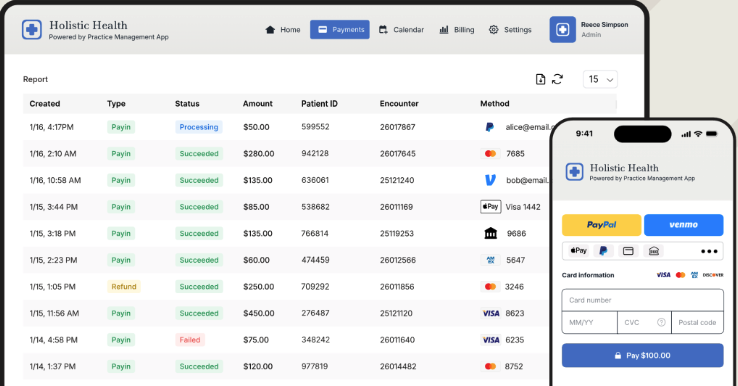
Think about it. If your merchants are already creating invoices, managing jobs, or running their point of sale through your platform, asking them to leave and process payments somewhere else creates unnecessary friction. Keeping payments inside the same workflow is simply a better experience.
It also changes the economics.
Instead of earning one subscription fee each month, platforms can generate ongoing revenue from payment volume that's already flowing through their software. No extra customers. No new workflow to sell. Just more value from the platform merchants already rely on.
That's why payments are often the first embedded financial product a vertical SaaS business launches. Once payments are built in, other products like lending, banking, or expense management become much easier to introduce because the platform already understands how its customers operate.
That's where Rainforest fits in.
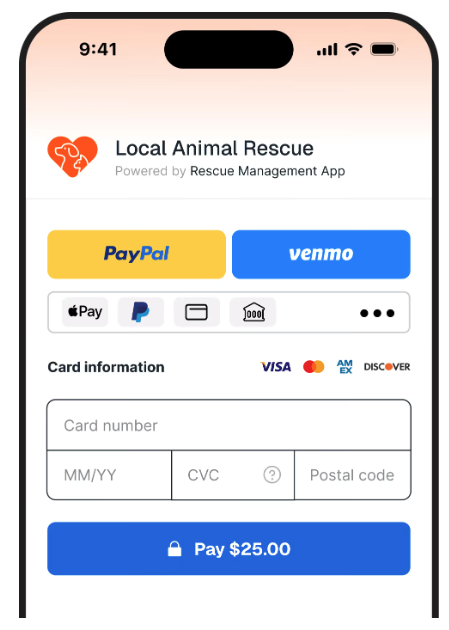
Rainforest is purpose-built for vertical SaaS platforms that want to launch embedded payments without building compliance, underwriting, or payments infrastructure in-house.
Our embedded payments API gives you full control of merchant onboarding, pricing, and reporting.
Where vertical SaaS goes from here
If you’re a vertical SaaS operator, payments belong on your product roadmap. Period. It shouldn’t be off to the side as someone else's job. Payments is typically the first step in the embedded fintech strategy. Once payments are embedded, everything after like lending, payroll, whatever comes next – gets a lot easier to introduce.
The commercial upside can be significant. An established SaaS company doubled its payments margin in less than 12 months. Because they treated payments as core infrastructure instead of an afterthought. That's the difference between offering payments as a feature and making them part of your business model.
Rainforest helps vertical SaaS companies make that shift. Our embedded payments infrastructure lets you launch payments without building the payments stack yourself, so you can unlock more revenue.
Frequently asked questions about vertical SaaS
What is vertical SaaS in simple terms?
Think of vertical SaaS as software built for one specific niche industry. Rather than asking businesses to adapt a generic tool, it comes with the workflows, terminology, and compliance features that industry already needs. That's why it often feels useful from day one.
Why do so many vertical SaaS platforms add embedded payments?
Revenue and retention, mostly. Platforms that embed payments earn on volume already moving through their software, and margin grows as that volume scales. Retention climbs alongside it, because merchants running billing, deposits, and payment history through the platform have much more to move before they can switch. Merchants want it too, since being sent elsewhere to get paid breaks a workflow they already work in. Leaving payments to a third party gives away the revenue, the relationship, data and the reason merchants stay, which is why platforms can't afford to ignore it.
Share this article
Subscribe to our blog
Be the first to hear about new content

Related articles
View all articles

.png)
Get started today.
Boost revenue with Rainforest
Get Started

Legal

© 2026 Rainforest Pay, Inc
